 Nativis Beauty
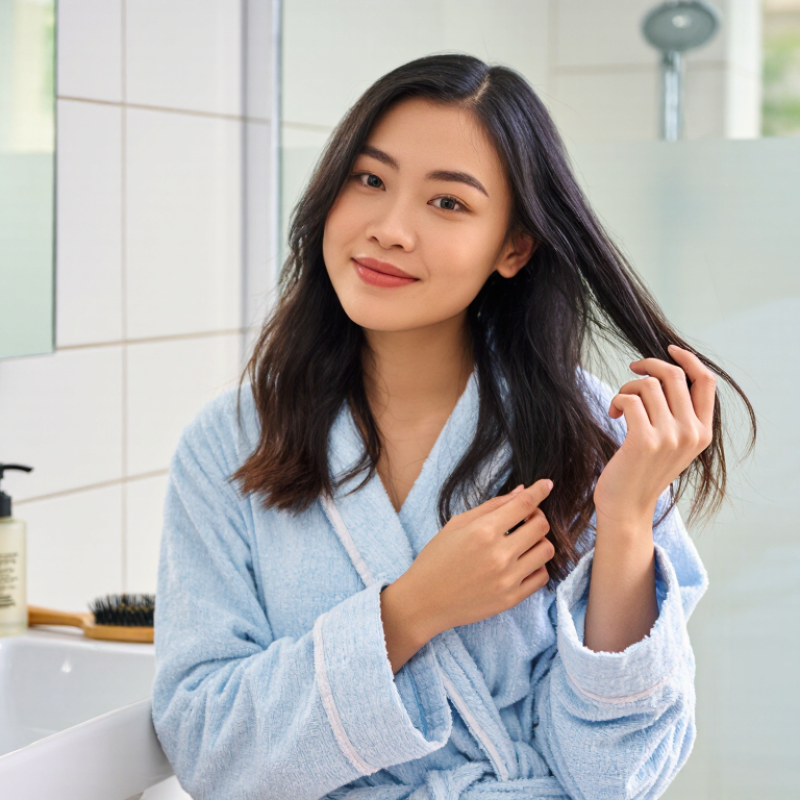
Top Reasons Why Your Hair Is Still Dry After Conditioning?
Product Mismatch: How Porosity and Hair Diameter Change Conditioning Results
Dryness after conditioning often points to a product mismatch, not a lack of effort. Porosity describes how easily the hair cuticle absorbs and loses water. Low-porosity hair has a tighter cuticle, so heavy creams may sit on the surface. The result can feel waxy, dull, and strangely dry. Lightweight conditioners and warm water may spread more evenly through these strands.
High-porosity hair behaves differently. Bleaching, heat, friction, and weather can lift or weaken the cuticle. Water enters quickly, but it also escapes quickly. This hair often needs richer conditioning agents, gentle detangling, and fewer harsh cleansing sessions. Still, “high porosity” tests using a glass of water are not scientifically reliable. Texture, chemical history, and breakage provide better clues.
Hair diameter matters too. Fine strands can become coated by rich formulas, even when their ends feel parched. Coarse strands usually need more lubrication because their larger fiber structure loses softness differently. A useful test is simple: apply a small amount from mid-length to ends, then observe the hair after drying. If it feels limp, reduce the amount. If it feels rough by evening, increase moisture or add a light leave-in layer.
I used to assume more conditioner meant more hydration. That idea is incomplete. Product weight, porosity, and strand size must work together. It takes some trial and error.
